

New titanium alloys could slash peri-implantitis rates
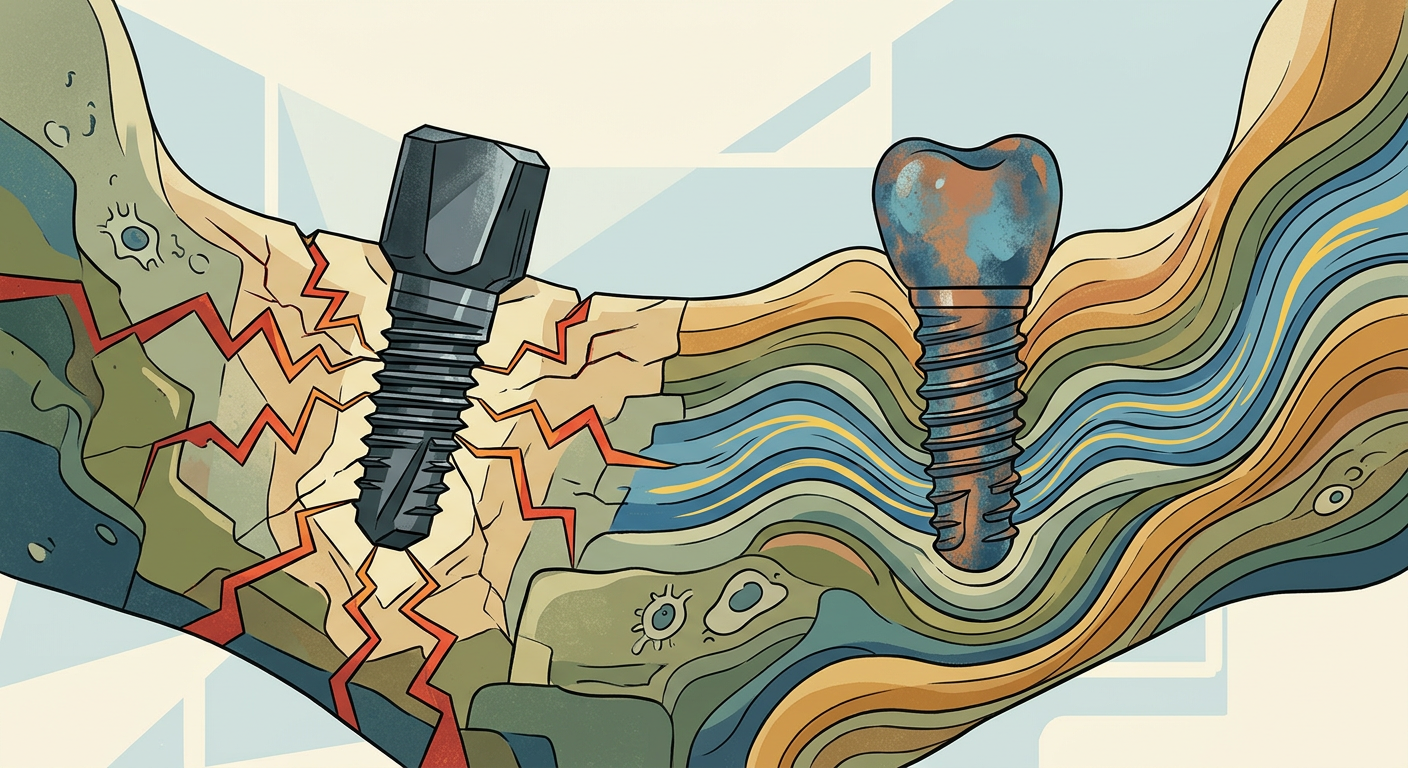
Five experimental titanium alloy compositions are showing superior biocompatibility and corrosion resistance compared to the industry standard Ti-6Al-4V in laboratory testing. Published in the Journal of Dentistry in December 2025, the research addresses the elastic modulus mismatch that has plagued implant dentistry - traditional titanium's 110 GPa modulus versus bone's 15-30 GPa creates stress shielding that affects up to 15% of implants in posterior sites.

New titanium alloys are showing promising biocompatibility profiles in laboratory testing, with five experimental compositions demonstrating improved corrosion resistance compared to traditional Ti-6Al-4V. The research, published in December 2025, suggests the industry may finally have alternatives that address the elastic modulus mismatch that has plagued implant dentistry for decades. For surgeons placing hundreds of implants annually, these developments could reduce peri-implantitis rates and improve long-term success.
Laboratory results show promise
The latest biocompatibility evaluation tested five novel titanium alloy compositions specifically designed for dental implants. Published in the Journal of Dentistry in December 2025, the study assessed both in vitro biocompatibility and corrosion resistance against current benchmarks. While the full composition details remain proprietary, the alloys were engineered to address known limitations of Ti-6Al-4V, particularly its high elastic modulus of 110 GPa compared to bone's 15-30 GPa.
This modulus mismatch creates stress shielding, where the implant bears loads that should be transmitted to surrounding bone. The result is bone remodelling that can compromise long-term stability. Current data suggests this affects up to 15% of implants placed in posterior sites with heavy occlusal loading.
The experimental alloys demonstrated superior corrosion resistance in simulated oral environments. Corrosion products from traditional titanium implants have been linked to inflammatory responses that can trigger peri-implantitis. One 2024 study found titanium particles in 73% of peri-implantitis tissue samples, compared to 12% in healthy peri-implant tissue.
"The high modulus of elasticity and concerns about cytotoxicity remain significant challenges with current Ti-6Al-4V alloys, despite their widespread adoption."
Beta-phase alloys offer mechanical advantages
Beta-type titanium alloys represent the most promising direction for next-generation implants. Unlike conventional alpha-beta alloys like Ti-6Al-4V, beta alloys can achieve elastic modulus values as low as 55 GPa while maintaining adequate strength. Research from ACS Biomaterials Science & Engineering highlights how these alloys better match bone's mechanical properties.
The manufacturing challenge lies in maintaining consistent beta phase structure during implant production. Traditional casting methods often result in mixed phases that compromise mechanical properties. Advanced powder metallurgy and additive manufacturing techniques show promise, with some facilities already producing beta-titanium components via selective laser melting.

Surface modification techniques are evolving alongside alloy development. Plasma electrolytic oxidation and laser texturing can create micro-topographies that enhance osseointegration regardless of base alloy composition. A 2025 systematic review found that surface-modified beta-titanium implants achieved 96.3% survival rates at five years, compared to 94.1% for machined Ti-6Al-4V surfaces.
Get The Friday Drill delivered weekly
Free implant industry intelligence, every Friday morning.
Clinical translation faces regulatory hurdles
Despite promising laboratory results, bringing new titanium alloys to market requires extensive clinical validation. The FDA's 510(k) pathway allows comparison to predicate devices, but novel alloy compositions may require more rigorous testing. Current regulatory timelines suggest commercially available beta-titanium implants remain 2-3 years away.
European markets may see earlier adoption under the Medical Device Regulation framework. CE marking processes can accommodate novel alloys with demonstrated biocompatibility, potentially creating a regulatory advantage for European manufacturers. Several companies have beta-titanium implants in clinical trials, with preliminary data expected by late 2026.
"CAD/CAM manufacturing combined with 3D printing enables titanium implants with desired features for treating dental conditions, increasing treatment speed with reduced effort."
Cost considerations will ultimately determine adoption rates. Beta-titanium raw materials cost approximately 40% more than Ti-6Al-4V, while advanced manufacturing adds another 15-20% to production costs. However, improved clinical outcomes could offset higher initial costs through reduced revision rates and enhanced patient satisfaction.
Implications for practice
The transition to next-generation titanium alloys will likely occur gradually, starting with complex cases where current materials show limitations. Immediate loading protocols, zygomatic implants, and narrow-diameter implants could benefit most from improved mechanical properties. Practices should monitor clinical trial results and consider pilot programmes with selected manufacturers.
Training requirements will be minimal, as surgical techniques remain unchanged. However, understanding alloy properties becomes crucial for treatment planning. Beta-titanium's lower modulus may allow more aggressive loading protocols, while improved corrosion resistance could extend implant longevity in challenging oral environments.
Inventory management presents practical challenges. Maintaining stock of both traditional and novel alloys during the transition period increases costs and complexity. Most practices will likely adopt a phased approach, introducing new alloys for specific indications before broader implementation.
Improved titanium alloys represent genuine progress in implant materials science, addressing fundamental limitations that have persisted for decades.
Key Takeaways
- Five experimental titanium alloys showed superior biocompatibility and corrosion resistance compared to Ti-6Al-4V in December 2025 laboratory testing
- Beta-phase titanium alloys can achieve elastic modulus values as low as 55 GPa, better matching bone properties and reducing stress shielding
- Surface-modified beta-titanium implants achieved 96.3% five-year survival rates versus 94.1% for machined Ti-6Al-4V in systematic review data
- Commercial availability remains 2-3 years away due to regulatory requirements, with European markets likely to see earlier adoption
Original source
Current Status of Research on Titanium and Titanium Alloys Used in Den
More in Implants

Get The Friday Drill
Curated implant industry news, CPD, and lifestyle — delivered free every Friday morning.