

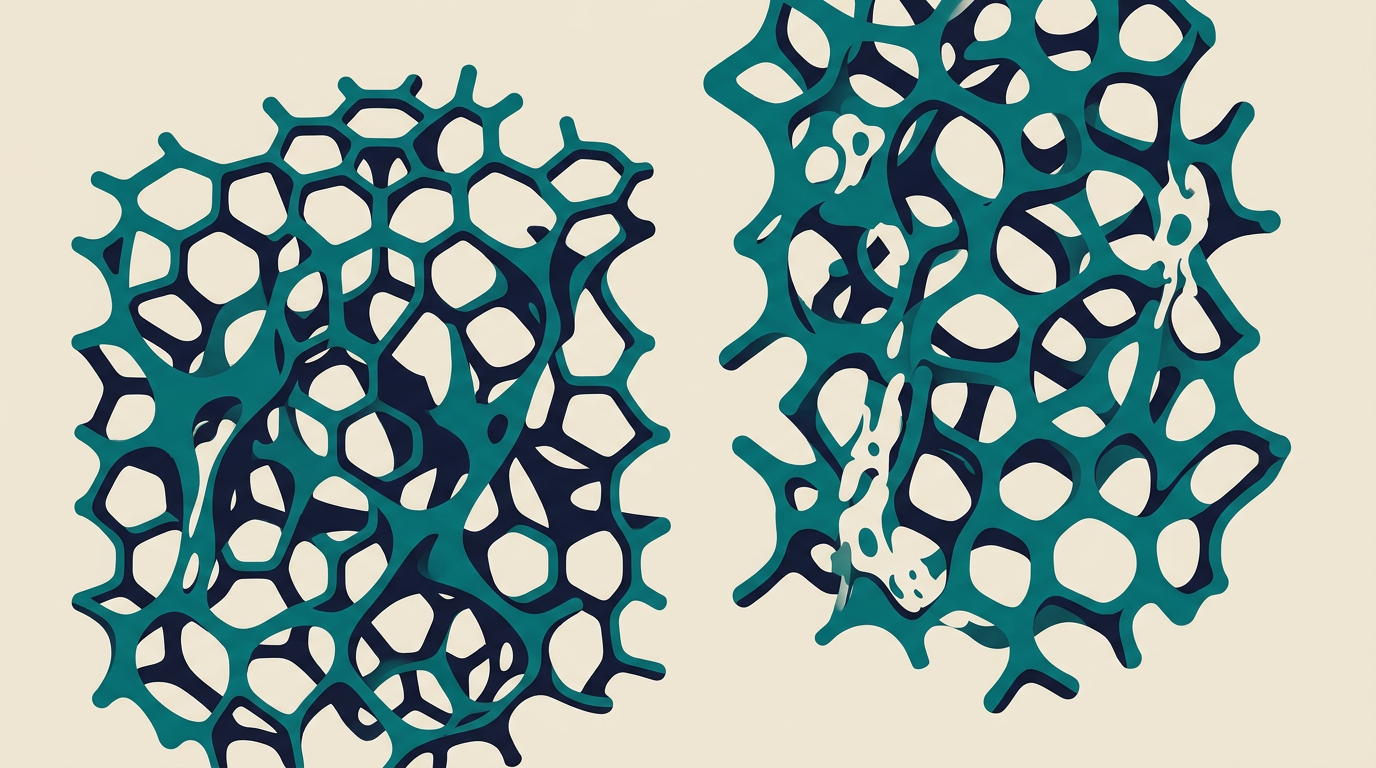
Porous titanium surfaces show superior bone integration in new studies
New research confirms that porous titanium implant surfaces achieve significantly better osseointegration than conventional solid designs. Studies comparing different pore architectures found that 632μm pore sizes delivered stronger bone integration than either 309μm or 956μm alternatives in rabbit tibial implants.

Recent advances in porous titanium alloy surface modifications are delivering measurably better osseointegration outcomes than conventional solid implant designs. New research on triply periodic minimal surface (TPMS) structures shows significantly greater bone formation and more stable bone-implant interfaces compared to traditional scaffolds.
The porous revolution gains momentum
The shift from solid to porous implant surfaces reflects decades of research into how bone responds to different structural environments. Traditional titanium implants rely primarily on chemical osseointegration — the direct contact between bone and implant surface. But porous structures create mechanical interlocking through bone ingrowth, potentially offering superior long-term stability.
The latest generation of porous modifications uses sophisticated manufacturing techniques like laser powder bed fusion (LPBF) to create complex three-dimensional structures. These aren't simple perforated surfaces but mathematically designed architectures that mimic natural bone porosity.
Micro-CT analysis revealed significantly greater new bone formation and more stable bone-implant interfaces in TPMS structures compared to solid scaffolds
Pore size precision matters
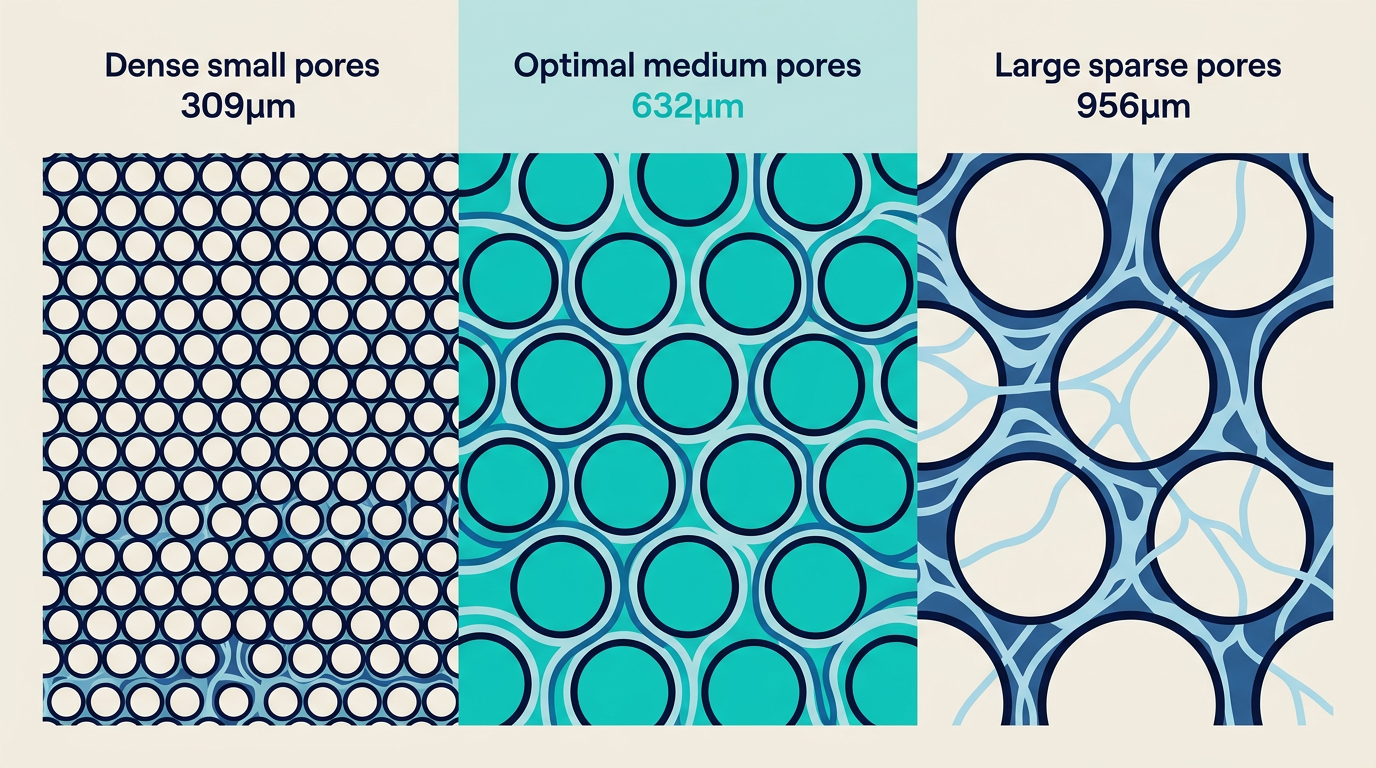
The devil is in the dimensional details. Recent animal studies have pinpointed optimal pore sizes for osseointegration. Research comparing different pore dimensions in rabbit tibial implants found that 632μm pore sizes achieved stronger osseointegration fixation than either 309μm or 956μm alternatives.
This finding challenges the assumption that bigger pores automatically mean better bone ingrowth. The 632μm sweet spot appears to balance several competing factors: adequate space for bone formation, sufficient surface area for initial cell attachment, and structural integrity of the implant itself.
The precision required highlights why surface engineering has become a specialist field. Manufacturing tolerances that seemed irrelevant a decade ago now directly impact clinical outcomes.
TPMS structures outperform conventional lattices
Triply periodic minimal surface designs represent the cutting edge of porous implant technology. Unlike simple strut-based lattices, TPMS structures like double-gyroid configurations create continuous, curved surfaces that better mimic natural bone architecture.
In vivo studies comparing TPMS designs to conventional porous structures show measurable advantages in angiogenesis — the formation of new blood vessels crucial for healthy bone integration. This vascular response appears linked to the smooth, continuous surfaces of TPMS structures, which may reduce stress concentrations that can impede blood flow.
The manufacturing challenge is significant. TPMS structures require advanced 3D printing capabilities and post-processing protocols that many implant manufacturers are still developing. But early clinical indicators suggest the complexity is justified.
Biomarker validation provides predictive power
Get The Friday Drill delivered weekly
Free implant industry intelligence, every Friday morning.
Parallel research into genetic markers of successful osseointegration is giving clinicians new tools to predict implant outcomes. Meta-analysis of recent studies identifies specific gene expression patterns that correlate with successful integration versus failure.
Successful osseointegration consistently shows upregulation of osteogenic genes like RUNX2, while failed implants exhibit elevated inflammatory cytokines such as IL-6 and imbalanced RANKL/OPG ratios. These biomarkers could eventually enable personalised implant selection based on individual patient bone biology.
The rational design of porous structures combined with biomarker-guided patient selection could fundamentally change implant success rates
The convergence of advanced surface engineering and biological prediction represents a significant evolution from the largely empirical approach that dominated implant dentistry for decades.
Clinical implications for practice
These developments have immediate relevance for implant selection and patient counselling. Porous surface modifications are becoming available from major manufacturers, though often at premium pricing. The key question for practitioners is whether the improved osseointegration justifies the additional cost.
For high-risk patients — those with compromised bone quality, heavy loading requirements, or previous implant failures — the evidence increasingly supports porous alternatives. The enhanced mechanical interlocking could prove particularly valuable in immediate loading protocols where early stability is critical.
Patient selection may also evolve as biomarker testing becomes clinically available. Rather than treating all implant candidates identically, practices could tailor surface selections to individual biological profiles.
The manufacturing reality check
Despite promising research outcomes, translating porous surface innovations to mainstream practice faces significant hurdles. The precision manufacturing required for optimal pore sizes and TPMS structures demands investment in advanced production capabilities that many manufacturers are still acquiring.
Quality control becomes exponentially more complex when dealing with intricate three-dimensional structures rather than simple surface treatments. Each porous implant must meet dimensional specifications across thousands of microscopic features.
Regulatory approval processes also remain lengthy for novel surface modifications, particularly those involving complex geometries that don't fit established testing protocols.
The evidence for porous titanium surfaces is compelling, but the path to widespread clinical adoption will likely take several more years as manufacturing capabilities mature and costs decrease.
Key Takeaways
- TPMS porous structures show significantly greater bone formation and more stable interfaces compared to solid implant designs
- Optimal pore size for osseointegration is 632μm, outperforming both smaller (309μm) and larger (956μm) alternatives in animal studies
- Biomarker patterns including RUNX2 upregulation and balanced RANKL/OPG ratios can predict successful osseointegration outcomes
- Manufacturing complexity and cost remain barriers to widespread adoption of advanced porous surface modifications
Original source
Frontiers | Research progress on osseointegration performance of porou
More in Implants


Get The Friday Drill
Curated implant industry news, CPD, and lifestyle — delivered free every Friday morning.